
THE HAUS NOTES · THE INTERNAL EDIT · 10 MIN READ
When we think about skin health, our attention often turns to skincare products, professional treatments and protecting our skin from environmental damage. But healthy skin involves more than what we apply to the surface. Nutrition, collagen production, digestive health and the gut microbiome all contribute to the broader conversation around skin health. This is where the growing interest in skin health from within comes in.
Collagen supplements and probiotics have become increasingly popular, with research exploring their potential roles in skin hydration, elasticity, digestive wellbeing and the relationship between gut health and skin. But what does the science actually tell us? Are collagen supplements worth considering? Can probiotics influence skin health? And how do you know which ingredients are worth incorporating into your routine?
At Lau-vei Haus, we believe in understanding the science behind the products we choose. Let's explore the research behind collagen supplementation and probiotics, including two formulations from IMBIBE: Miracle Collagen and Beauty Renewal Probiotic Concentrate.
What Are Collagen Supplements?
Collagen supplements generally contain hydrolysed collagen peptides. Hydrolysis breaks collagen down into smaller peptides, making them easier to digest and absorb.
Once consumed, collagen peptides are broken down and absorbed through the digestive system. Research suggests certain bioactive collagen peptides may influence processes involved in skin hydration, elasticity and collagen production.
Importantly, collagen supplements do not simply travel directly into the skin and replace lost collagen.
Instead, specific collagen peptides may act as signalling molecules, potentially influencing the activity of cells involved in maintaining the skin's structural framework.
Human clinical studies have investigated collagen supplementation for:
Skin hydration.
Skin elasticity.
The appearance of fine lines and wrinkles.
Skin firmness.
Nail strength and brittleness.
Results are promising, although outcomes vary between formulations, doses, study populations and individual circumstances.
Why Does Collagen Matter for Skin?
Collagen is one of the primary structural proteins within our skin. It contributes to the framework that helps maintain skin firmness, strength and resilience. As we age, collagen production naturally changes. This contributes to the gradual loss of firmness, changes in elasticity and the development of fine lines and wrinkles. Environmental factors, particularly ultraviolet radiation from sun exposure, can further accelerate collagen breakdown.
This is why collagen preservation and stimulation are such important considerations in skin health. While professional treatments such as collagen-stimulating procedures and skin needling can support specific skin goals, nutritional support is another area receiving increasing scientific interest.
What are the potential benefits of collagen supplementation?
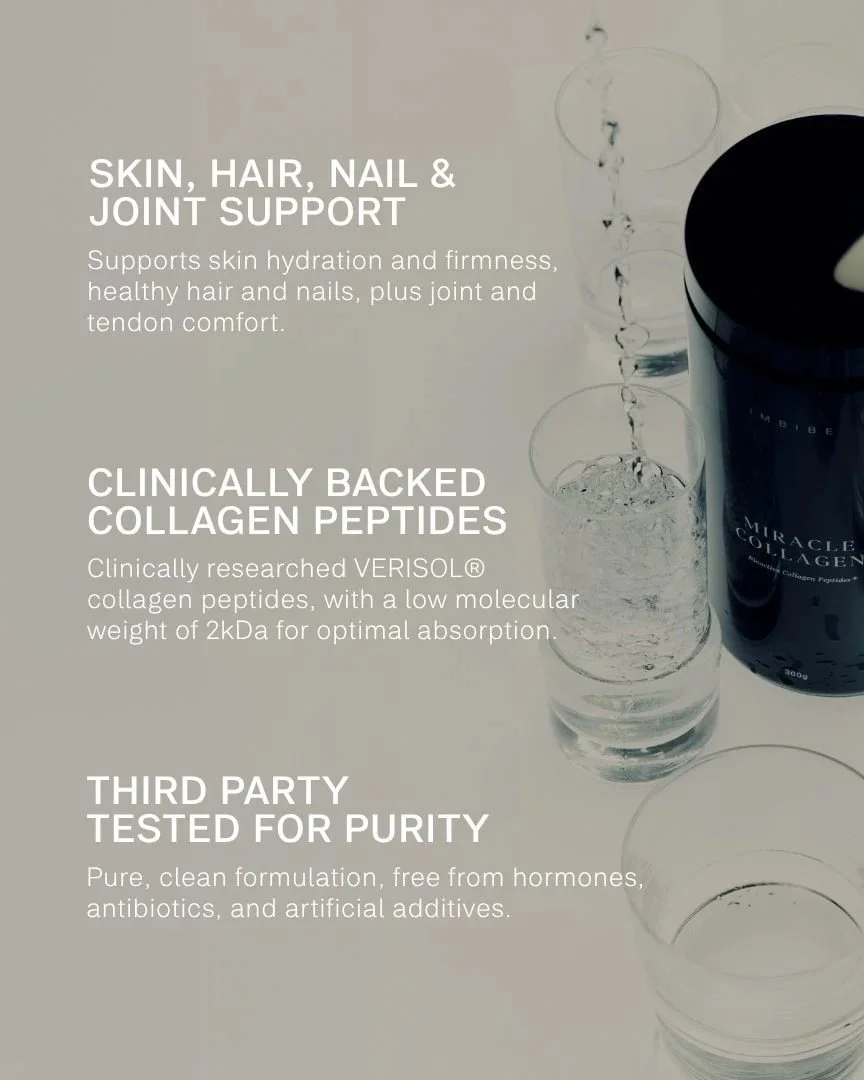
Miracle Collagen by IMBIBE contains VERISOL®, a clinically studied bioactive collagen peptide derived from bovine collagen. The formula contains hydrolysed collagen peptides and is designed to provide a simple, daily source of bioactive collagen without additional flavours or unnecessary ingredients.
Supporting skin elasticity
Clinical research involving specific collagen peptides has demonstrated improvements in skin elasticity, an important component of skin resilience and firmness.
Supporting skin hydration
Some studies have reported improvements in skin hydration following consistent collagen supplementation.
Supporting the appearance of fine lines
Research involving VERISOL® has investigated improvements in wrinkle depth and the appearance of fine lines, including around the eyes.
Supporting hair and nails
Collagen contains amino acids that contribute to the body's broader protein requirements. Some research has explored its potential role in nail strength and brittleness.
These benefits should be considered supportive rather than guaranteed. Collagen supplementation is not a replacement for a balanced diet, appropriate skincare or professional treatment.
Gut Health and Skin: Understanding the Gut–Skin Axis
The gut and skin are two complex organs that communicate with the wider body through immune, metabolic and inflammatory pathways. This relationship is commonly referred to as the gut–skin axis.
The gut microbiome consists of the diverse microorganisms living within our digestive system. These microorganisms play important roles in digestion, nutrient metabolism, immune function and maintaining the intestinal environment. Research continues to explore how the gut microbiome may influence skin conditions, inflammation and overall skin health.
Although the relationship is fascinating, it is important to understand that the gut–skin axis is still an evolving area of research. Improving gut health does not automatically mean clearer skin, and probiotics are not a universal solution for acne, rosacea or other inflammatory skin conditions. However, supporting digestive health and maintaining a diverse, balanced diet remain important foundations of overall wellbeing.
What Are Probiotics?
Probiotics are live microorganisms that, when consumed in adequate amounts, can provide a health benefit. Different probiotic strains have different properties. Their effects depend on the specific microorganism, dose, formulation and individual.
Some probiotic strains have been studied for digestive comfort, bowel function and specific gastrointestinal concerns. Others are being investigated for their potential relationship with immune function and skin health.
This is why it is important to look beyond the word probiotic and understand what a formulation actually contains.
What are the potential benefits of Beauty Renewal?
Supporting digestive wellbeing
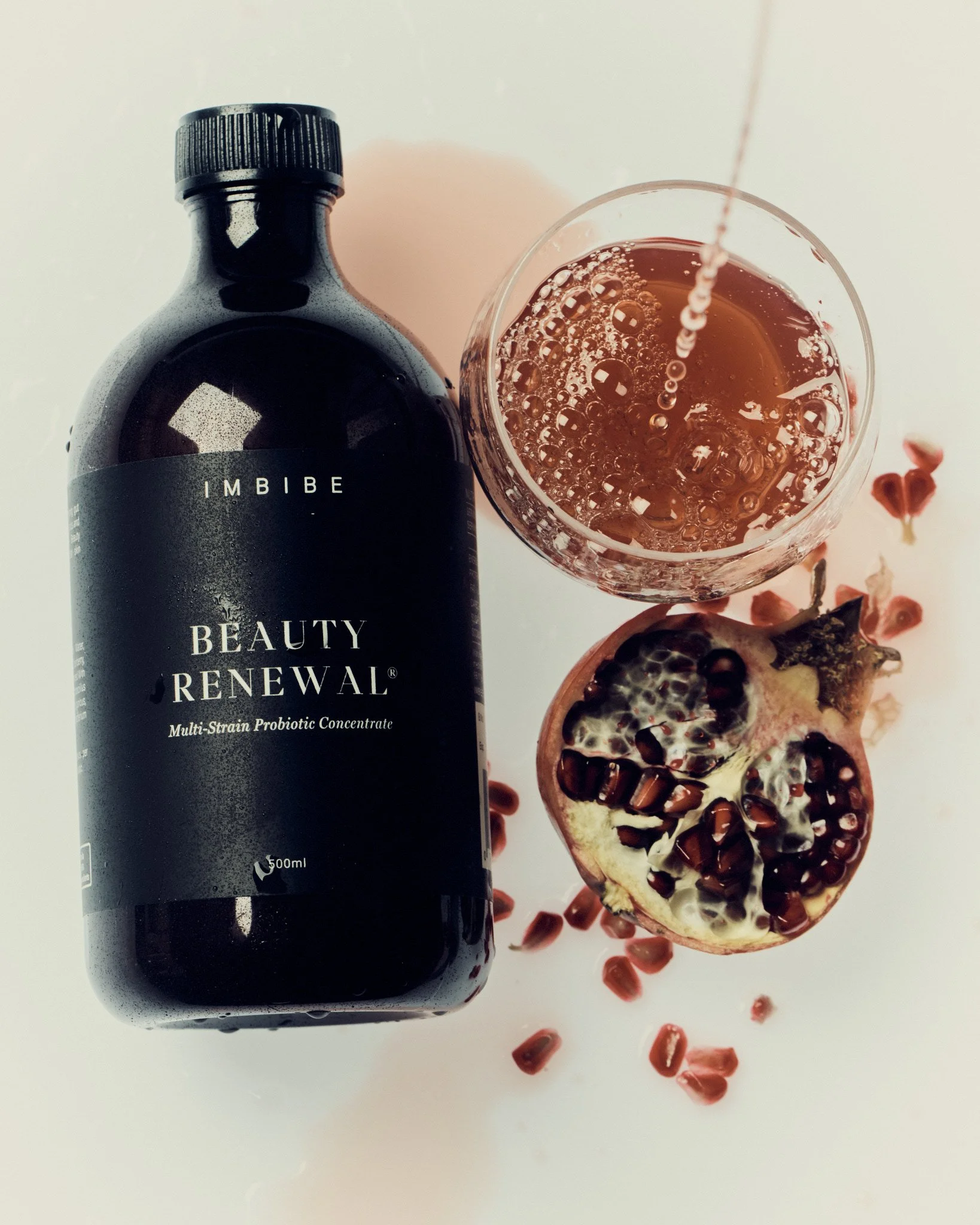
Beauty Renewal contains multiple probiotic strains from Lactobacillus and Bifidobacterium groups, alongside Saccharomyces cerevisiae. Specific probiotic strains have been investigated for their role in digestive health and maintaining microbial balance.
Supporting digestive comfort
Some probiotics may help support digestive comfort and reduce certain symptoms of bloating, depending on the strains used and the individual. Bloating can have many causes, however, and persistent symptoms should not automatically be attributed to an imbalanced microbiome.
Supporting the gut–skin axis
The gut microbiome is an increasingly important area of skin health research. Beauty Renewal is formulated with the intention of supporting gut wellbeing as part of a broader approach to skin health. While this relationship is scientifically interesting, probiotic supplementation should not be considered a proven treatment for acne, pigmentation, rosacea or premature skin ageing.
Antioxidant support
Beauty Renewal also contains grapeseed, pomegranate and elderberry extracts. These botanical ingredients contain antioxidant compounds that have been studied for their biological properties. Antioxidants are involved in protecting cells from oxidative stress, although the presence of antioxidant ingredients in a supplement does not establish a direct clinical skin benefit.
What Does the Research Actually Tell Us?
This is where a considered approach matters. There is growing research into collagen peptides, probiotics and their relationship with skin health. However, not all supplements are supported by the same level of evidence.
A few important distinctions:
Research involving a specific collagen peptide cannot automatically be applied to every collagen supplement.
Probiotic effects are strain-specific, meaning one probiotic cannot be assumed to provide the same benefits as another.
Improvements observed in small clinical studies do not guarantee the same results for every individual.
Consumer satisfaction studies are useful for understanding experiences but are not equivalent to controlled clinical trials.
Supplements should complement, rather than replace, appropriate nutrition, skincare, sun protection and professional treatment.
Our preference is always to look at the ingredient, formulation, research and intended outcome rather than relying solely on marketing language.
Ingestible Supplements Are Not a Replacement for Your Skincare Routine
One of the most important things to understand about skin health is that no single intervention does everything. Collagen supplements do not replace topical skincare. Probiotics do not replace medical treatment for skin conditions and, neither replaces daily sun protection.
A considered skin health routine may include:
Daily broad-spectrum SPF50+ sunscreen.
Appropriate skincare to support the skin barrier.
Adequate dietary protein and overall nutrition.
A varied diet rich in fruits, vegetables and fibre.
Appropriate management of underlying skin concerns.
Professional treatments when indicated.
Lifestyle considerations, including sleep and stress management.
The goal is not to create an endless list of products and supplements. It is to understand what may genuinely support your skin, what is unnecessary and where your investment is best placed.
Our Approach to Skin Health From Within at Lau-vei Haus
At Lau-vei Haus we believe skin health is more than what we apply to the surface. It is influenced by a combination of biological processes, environmental exposure, lifestyle, nutrition and the way we care for our skin over time.
IMBIBE Beauty Renewal and Miracle Collagen are two different approaches to supporting skin health from within, each with a distinct formulation and research background.
Because good skin health is rarely about doing more. It's about understanding what matters.
Lauren Chandler
Registered Nurse · Advanced Dermal Clinician · Aesthetic Clinical Trainer
Founder, Lau-vei Haus
Ascot, Brisbane
Personalised aesthetic medicine, skin health and regenerative care.
Frequently Asked Questions About Collagen, Probiotics & Skin Health
-
Some clinical studies suggest that specific hydrolysed collagen peptides may support skin hydration and elasticity and improve the appearance of fine lines. Results vary depending on the collagen formulation, dosage, duration of use and individual. Collagen supplements should complement, rather than replace, a balanced diet and appropriate skincare.
-
When choosing a collagen supplement, consider the source of collagen, the type of collagen peptides, the daily serving size and whether the specific formulation has been clinically studied. IMBIBE Miracle Collagen contains VERISOL®, a bioactive collagen peptide that has been investigated in human studies relating to skin elasticity and wrinkles.
-
Probiotics are live microorganisms that may provide health benefits when consumed in adequate amounts. Research is exploring the relationship between the gut microbiome, immune function and skin health. However, probiotic benefits are strain-specific, and there is currently insufficient evidence to suggest that all probiotics directly improve skin conditions.
-
The gut–skin axis describes the relationship between the digestive system, gut microbiome, immune function and skin. Researchers are investigating how changes in gut microbial activity may influence inflammatory pathways and skin conditions. It is an evolving area of research, rather than a proven explanation for every skin concern.
-
Collagen supplements provide collagen-derived peptides that have been studied for their potential effects on skin structure, hydration and elasticity. Probiotics contain live microorganisms that are primarily investigated for their effects on digestive and immune health. They have different functions and are not interchangeable.
-
Many healthy adults can incorporate collagen peptides and probiotics into the same daily routine. They have different intended functions and are not inherently conflicting. Individual health conditions, medications and dietary requirements should always be considered.
-
Clinical studies investigating skin-related outcomes from collagen supplementation commonly run for approximately 8–12 weeks. This does not guarantee results within that timeframe, and individual responses vary. Consistency and the specific formulation matter.
-
Collagen supplements and topical skincare work differently and should not be viewed as alternatives. Topical skincare can support the skin barrier, hydration and protection from environmental damage, while collagen supplementation provides dietary collagen peptides. A considered approach may include both, depending on individual goals.
-
Research is exploring possible connections between gut microbiome composition, immune signalling and inflammatory skin conditions, including acne. However, acne has multiple contributing factors, and probiotics are not an established standalone treatment for acne or other inflammatory skin conditions.
Individual results vary. Supplements are not intended to diagnose, treat, cure or prevent disease. Information provided is educational and does not replace individual medical advice.